Nicolas Guilitte, photographing fireworks as a living memory
Some discover fireworks.
Others never stop following them.
For more than twenty years, Nicolas Guilitte has travelled across Europe’s pyrotechnic shows with undiminished passion. Based in Belgium, he has developed over the years a discerning eye, shaped by experience, music, and a deep attachment to preserving the memory of shows.
Because for him, photographing a fireworks display is not only about capturing an explosion in the sky.
It is about telling the story of a moment, a place, an emotion.
A passion born from the show
His first encounter with pyrotechnics dates back to his teenage years.
Before photography, there was music—more specifically, the concerts of Jean-Michel Jarre, whose recordings he watched over and over again.
“I think it all started there.”
Very early on, Nicolas felt the need to keep a record of the moments he experienced.
First with compact cameras, then with a video camera from 2008 onwards, with which he filmed the shows he attended.
His first fireworks photos date from that same period, at the Nuits de Feu in Chantilly.
“I was taking photos handheld… you could say they looked like nothing!”
But the essentials were already there: the desire to observe, to understand, to preserve.
The photography breakthrough
For several years, Nicolas prioritised video.
Long-exposure photography did not seem faithful to the reality of the show to him.
“I thought it was cheating, that it was not what you see as a spectator.”
Then came a turning point in the early 2010s.
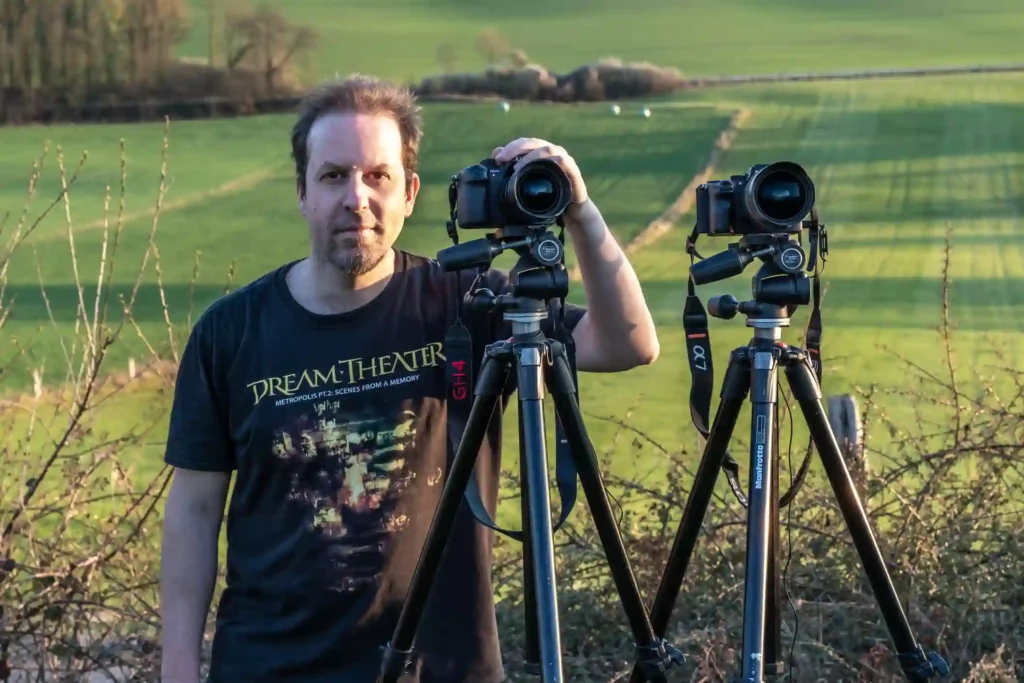
By discovering the work of other photographers, he understood that pyrotechnic photography is a form of writing in its own right.
In 2013, he bought his first DSLR.
His passion then took on a new dimension, strengthened over time by experience, advances in equipment, and the discovery of retouching tools.
From fire to place
Over the years, his perspective has evolved.
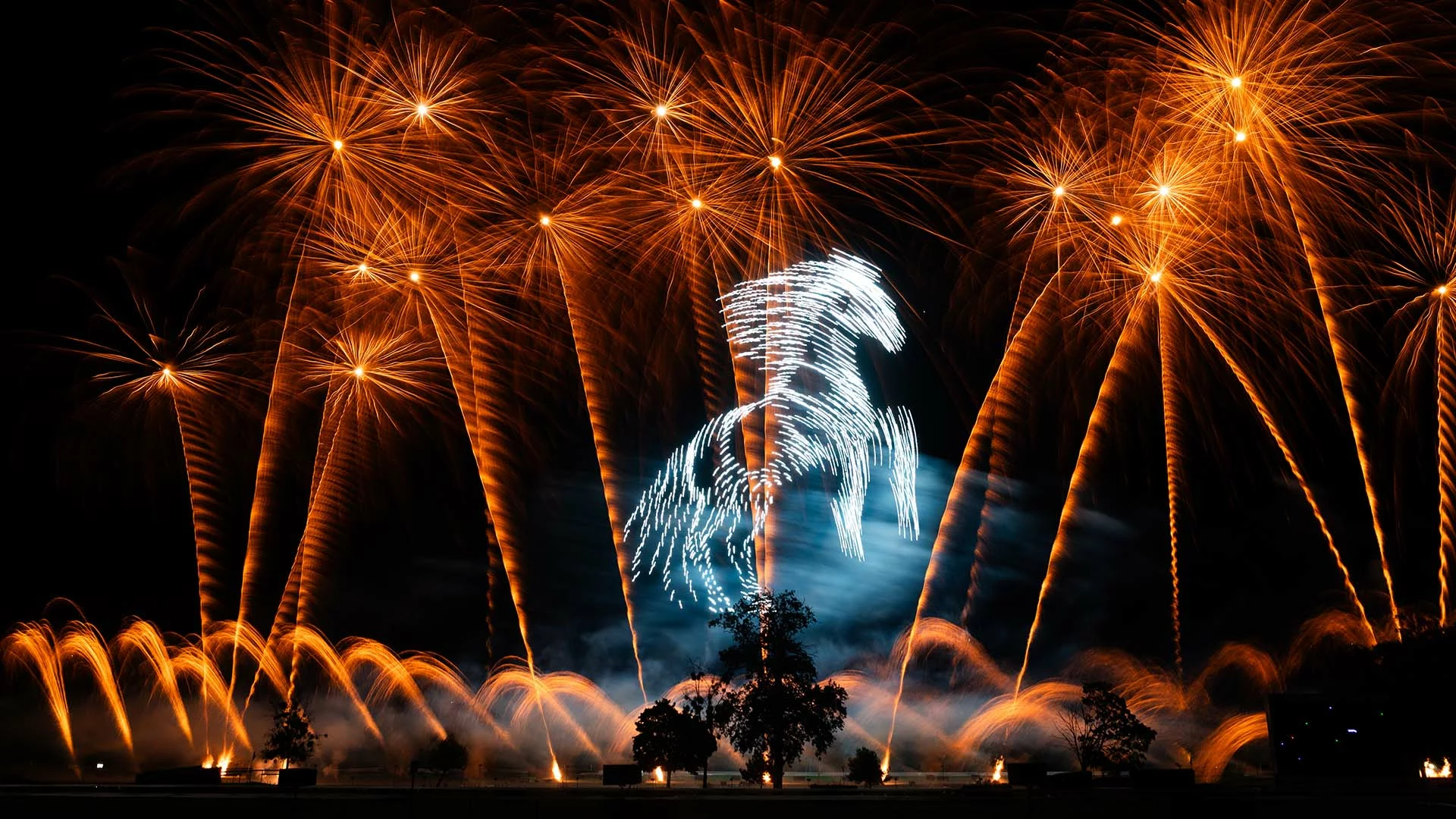
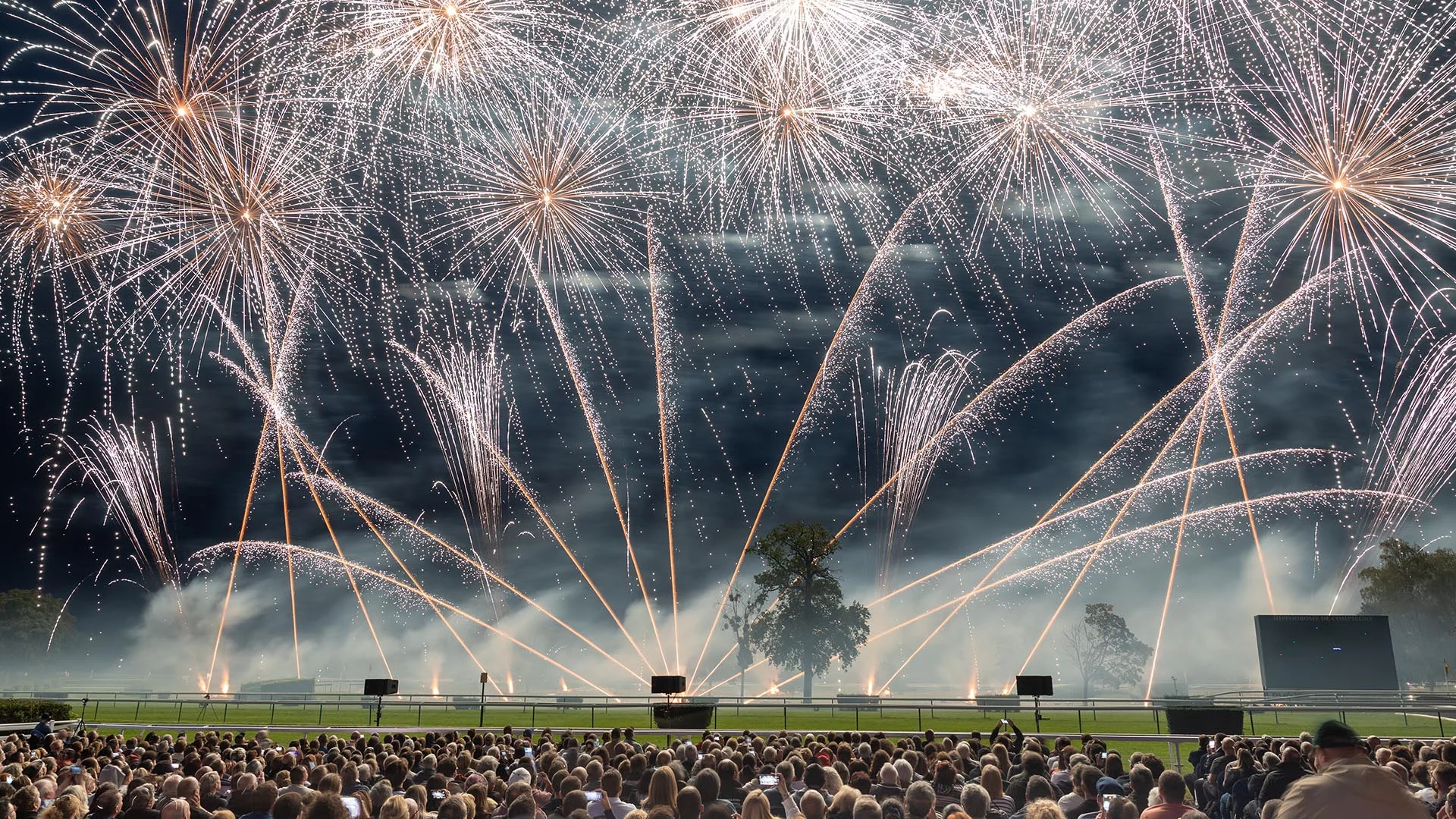
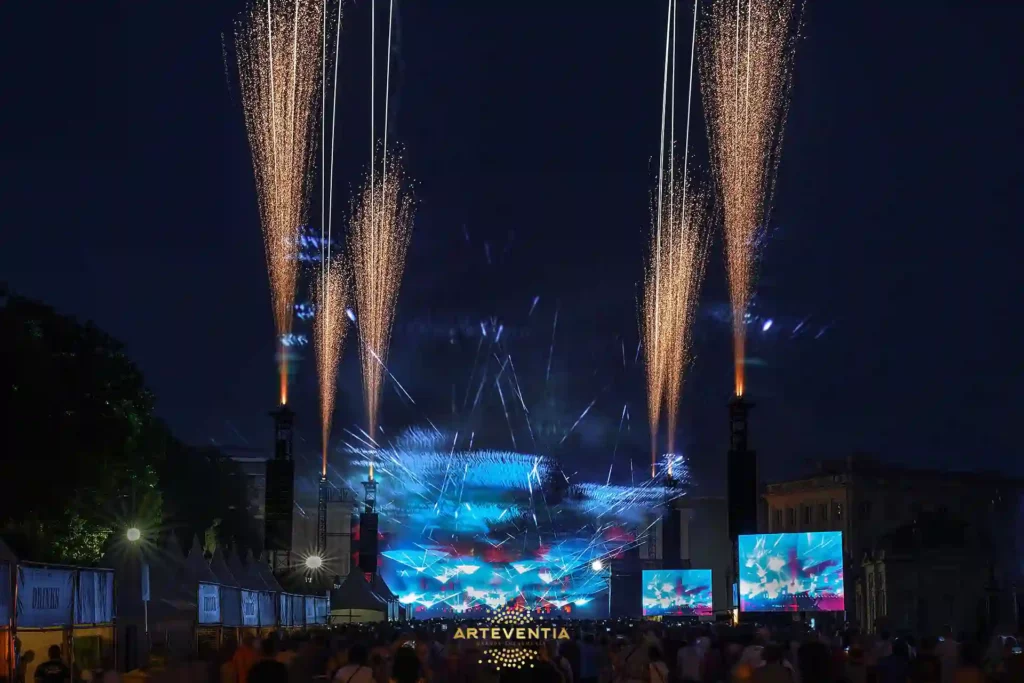
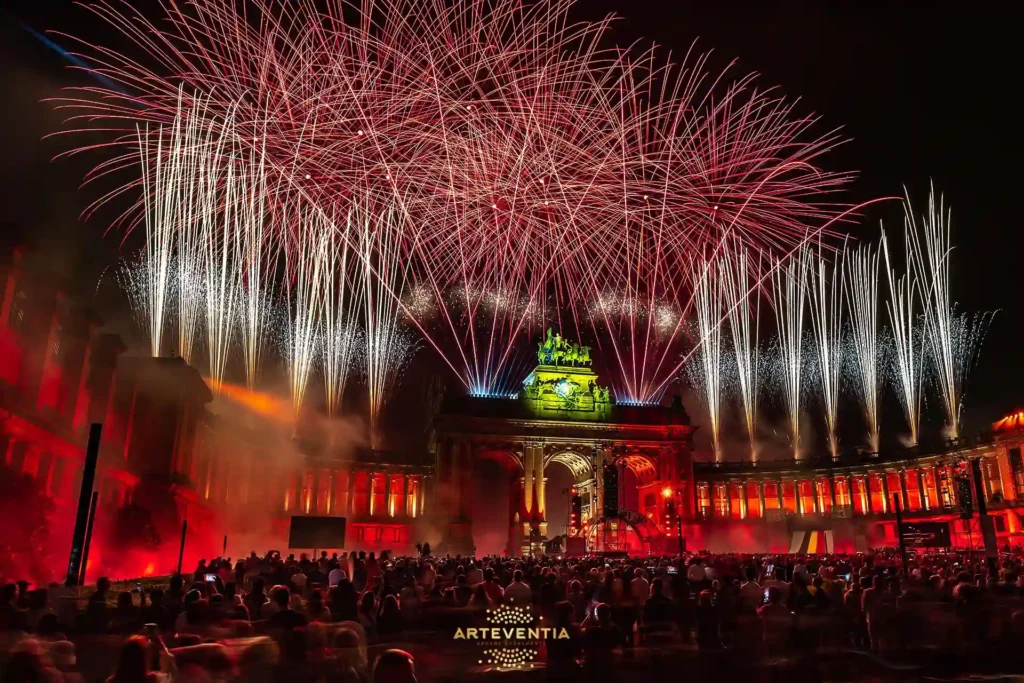
Where he initially sought to capture the fire in all its graphic richness, he is now more interested in the relationship between pyrotechnics and their surroundings.
“Today, what interests me is showcasing a place through fire.”
Architecture, terrain, reflections…
the setting becomes essential.
“A display fired over a football pitch interests me far less. What matters is what the fire brings to the place.”
A demand for composition
For Nicolas, a successful photo relies on a precise balance:
-
an identifiable location
-
a clear composition
-
accurate light management
-
graphic consistency
He also pays particular attention to the final rendering, especially in post-production.
“I try to remove everything I consider to be distractions: small streaks, residual dots…”
Meticulous work, almost invisible, but essential to the quality of the image.
Preparing without locking things in
Preparation is an integral part of his approach.
Before a show, Nicolas can spend long hours exploring locations on Google Street View.
“I love doing that. I identify viewpoints, distances, obstacles…”
Once on site, he often arrives early to validate his choices and find the right angle.
But despite this preparation, he refuses to lock his approach in.
“I much prefer going by feel rather than trying to memorise the entire sequence of the fireworks.”
Instinct remains an essential component.
Shows that leave a mark
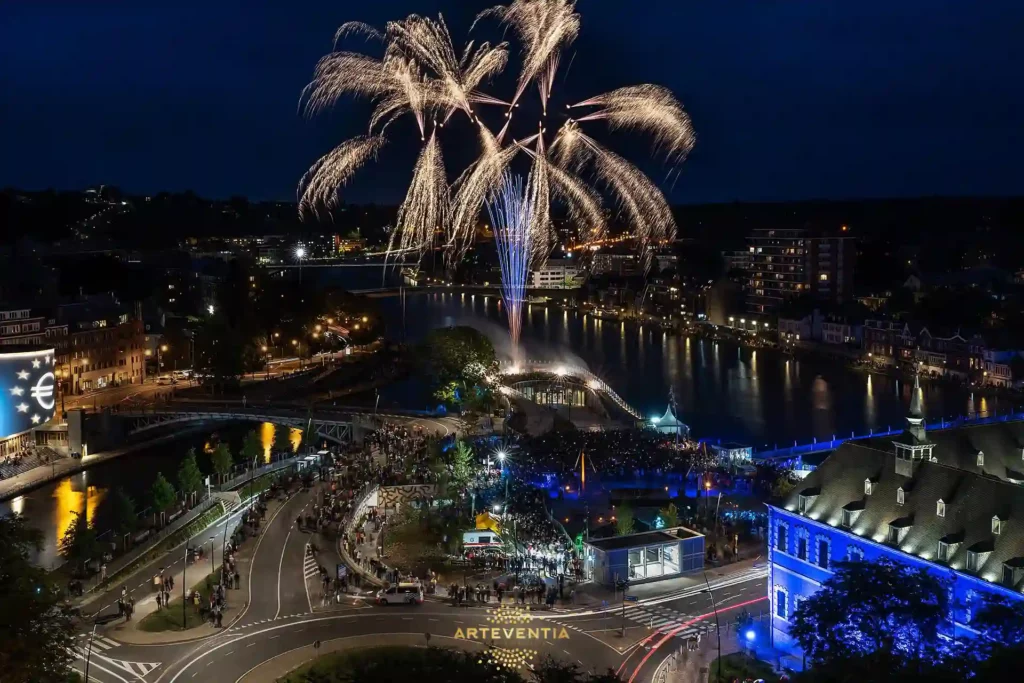
Over the years, certain shows have profoundly marked Nicolas—not as a photographer, but as a spectator.
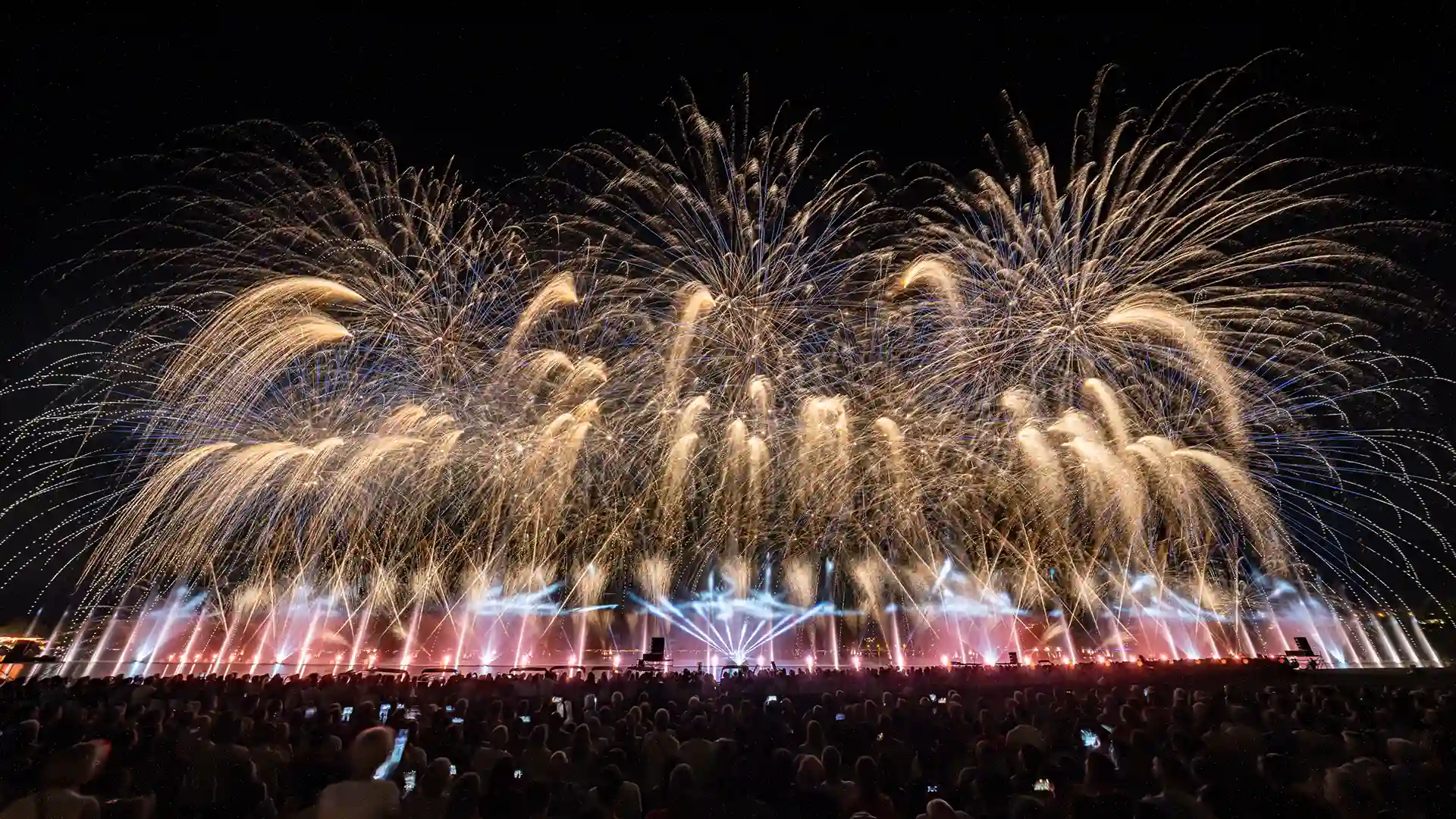
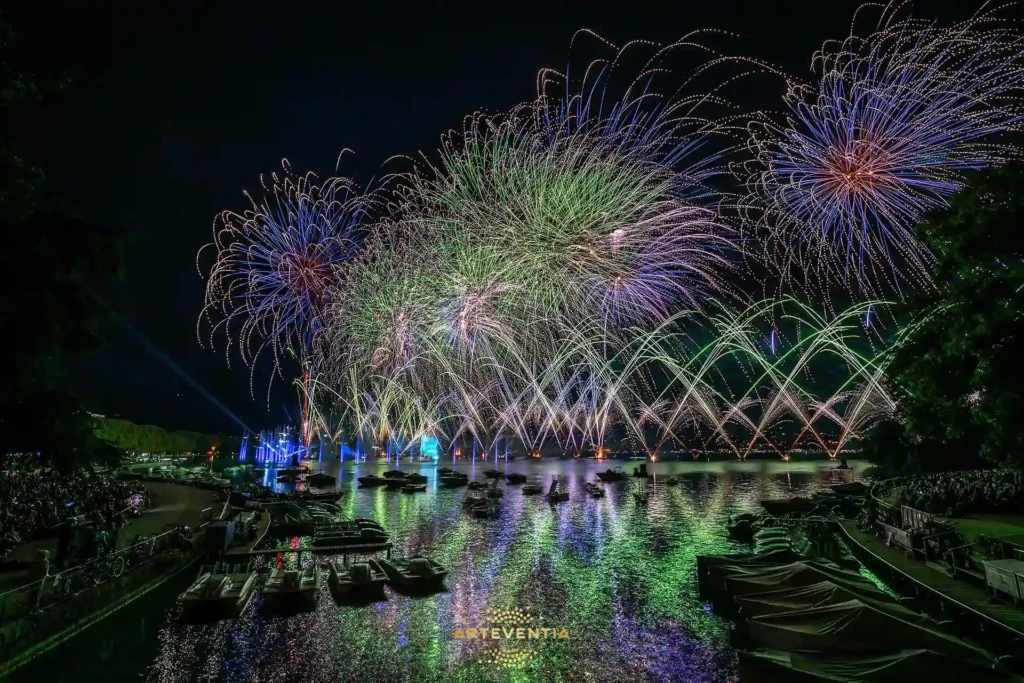
Fête du lac in Annecy, discovered in 2003, remains a formative memory.
“It was the first very large display I attended. I fell in love with it.”
He also mentions the Grand Feu de Saint-Cloud, for its unique atmosphere and visual richness.
“It was not the most technical, but there was something truly special about it.”
And finally, a more personal memory: a fireworks display designed for a concert by his own band in Namur.
“I was behind my drum kit, I could not see anything… but I could hear everything.”
An intense moment, experienced differently.
Technique and high standards
While perspective and experience are essential, Nicolas also emphasises the importance of equipment.
“The photographer matters a lot, but the equipment makes a real difference.”
The move to more professional equipment marked a significant improvement in the quality of his images.
Retouching also plays an important role, sometimes making it possible to reveal an image you thought was a failure.
Photographing in his own bubble
During the show, Nicolas focuses entirely on his shooting.
“I am in my own bubble.”
But he remains attentive to the surroundings, especially the audience’s reactions.
He has a strong memory of the Quebec audience in Montreal:
“A very enthusiastic audience, but also knowledgeable.”
A memory of the show
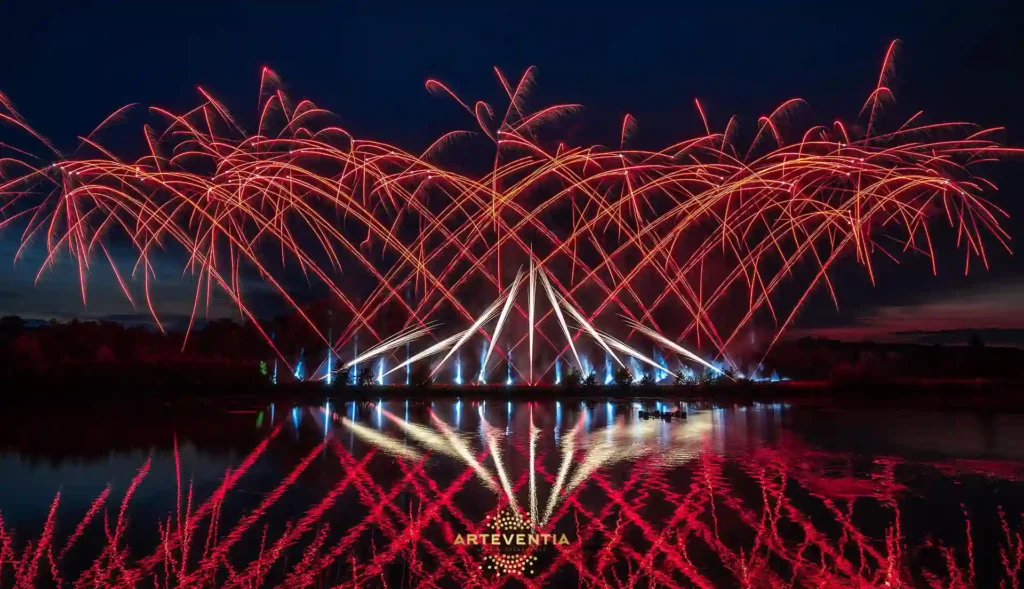
For Nicolas, photography is above all a way of keeping a record.
“It helps preserve a memory, especially for shows that may never happen again.”
His images thus become a visual memory, which he sometimes revisits himself
A practice in transition
With clear-eyed realism, he observes the changes in the sector.
Fewer shows, more constraints… and the emergence of new forms such as drones.
“We need to stop saying these are the fireworks of the future; it has nothing to do with that.”
However, these technologies do offer new visual possibilities, including for photography.
A gaze turned towards Japan
If he had to choose a place to photograph, Nicolas does not hesitate.
“Japan, and its hanabis. We will never see that here.”
A photographer’s dream, but also a passionate enthusiast’s.
In one sentence
“Capturing an artistic creation that elevates a place through graphic frescoes drawn in the sky.”
Profile
Nicolas Guilitte
Pyrotechnic show photographer based in Belgium
Passionate about music and pyrotechnics, he has been developing for more than ten years a keen eye for showcasing locations and preserving the visual memory of shows.
Also worth reading: