Why international competitions transform show design
A competition is not just another fireworks display.
In a public event, the show must captivate.
In an international competition, it must convince.
This difference changes everything.
In Montreal, Danang, Poland at Pyromagic, at the Masters of Fire in France, or at the Cannes International Pyrotechnic Art Festival, teams do not only perform in front of thousands of spectators. They face a jury, precise artistic criteria, and a tradition of excellence.
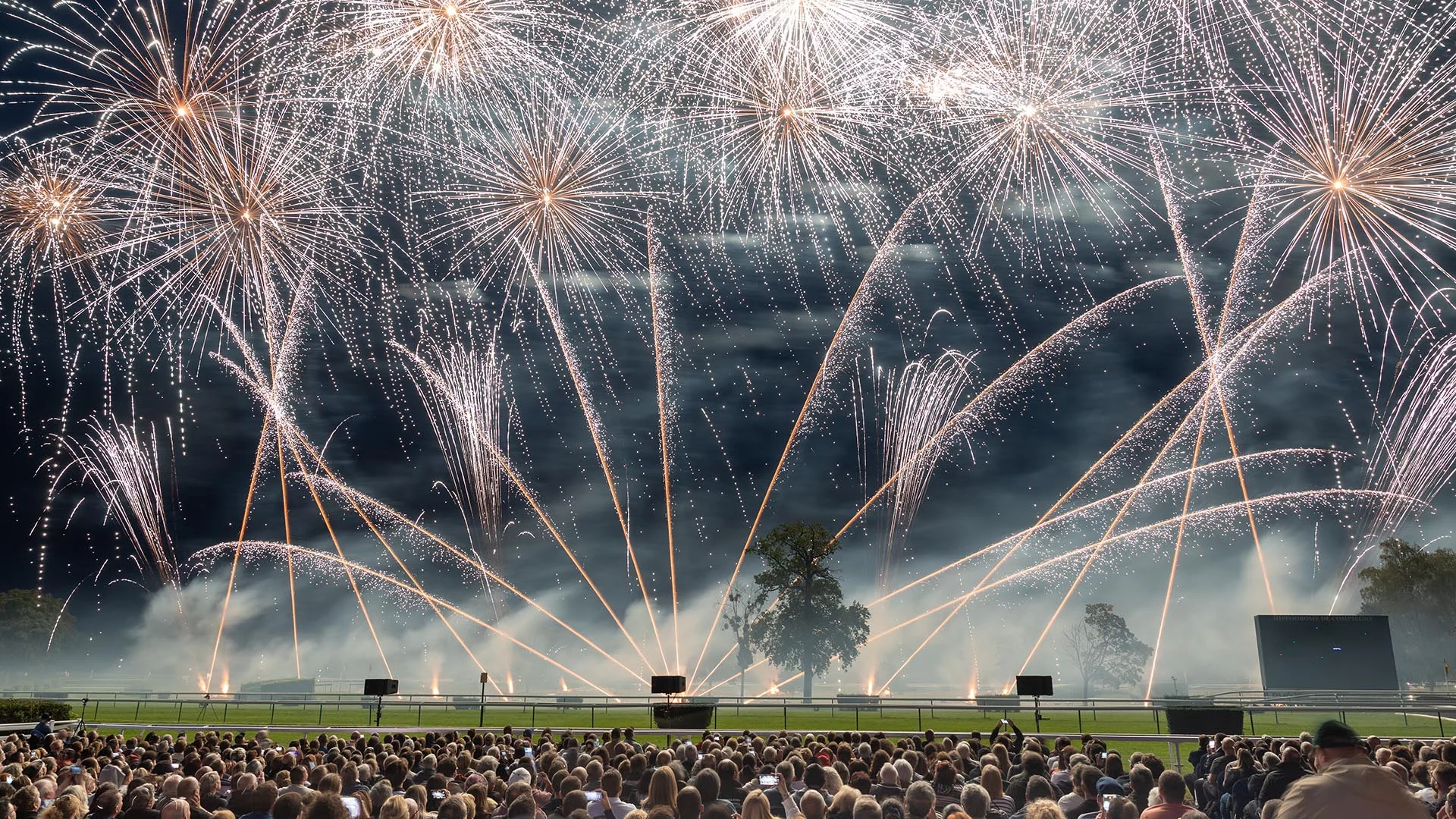
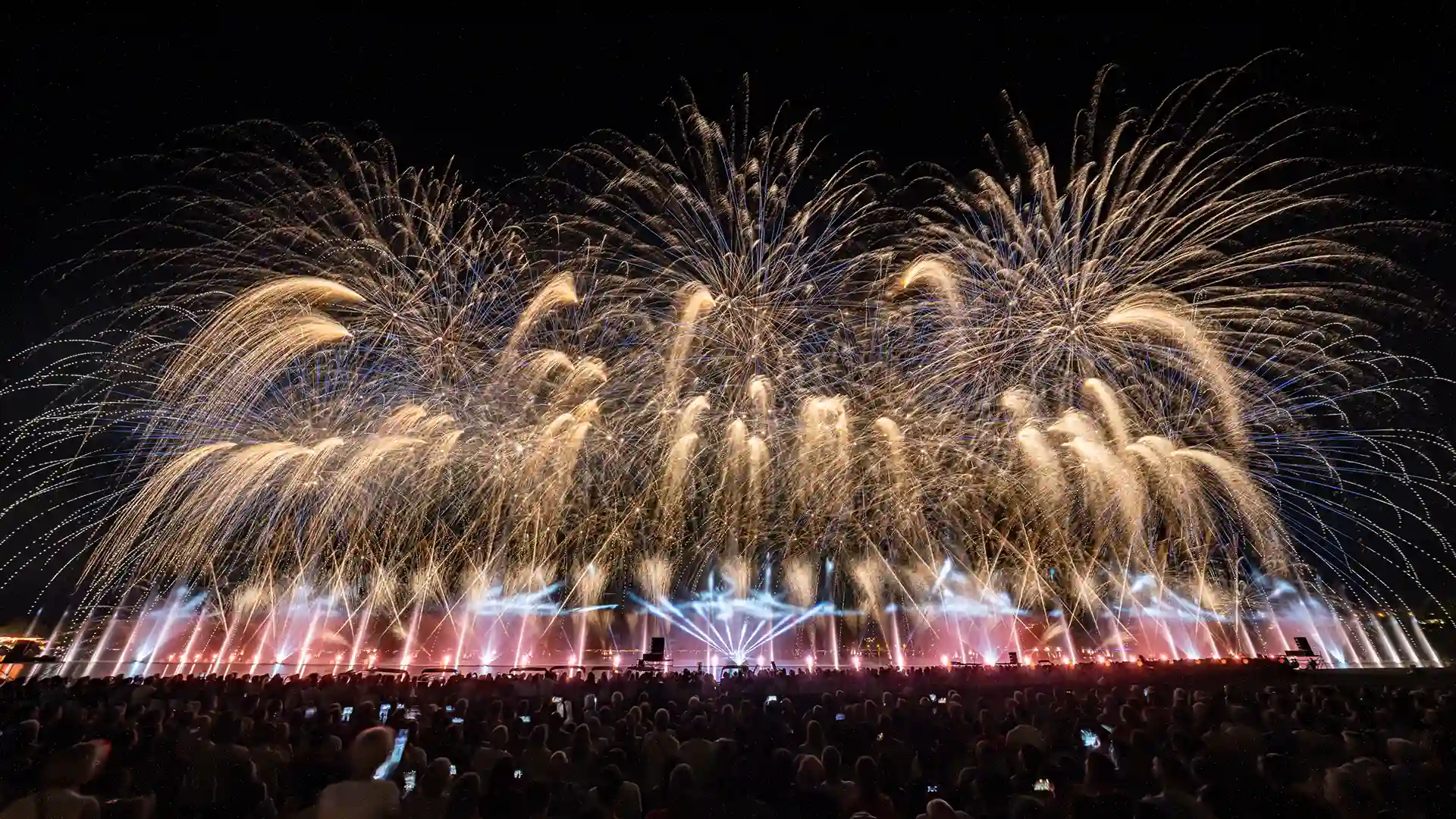
In Cannes, for example, each date gathers hundreds of thousands of people on the Croisette and at sea. The festival, one of the most prestigious in the world, demands meticulous design. The setting is monumental. The audience is demanding. The jury pays attention to the smallest detail: musical synchronization, originality, artistic coherence, technical mastery.
In these contexts, creation scales up.
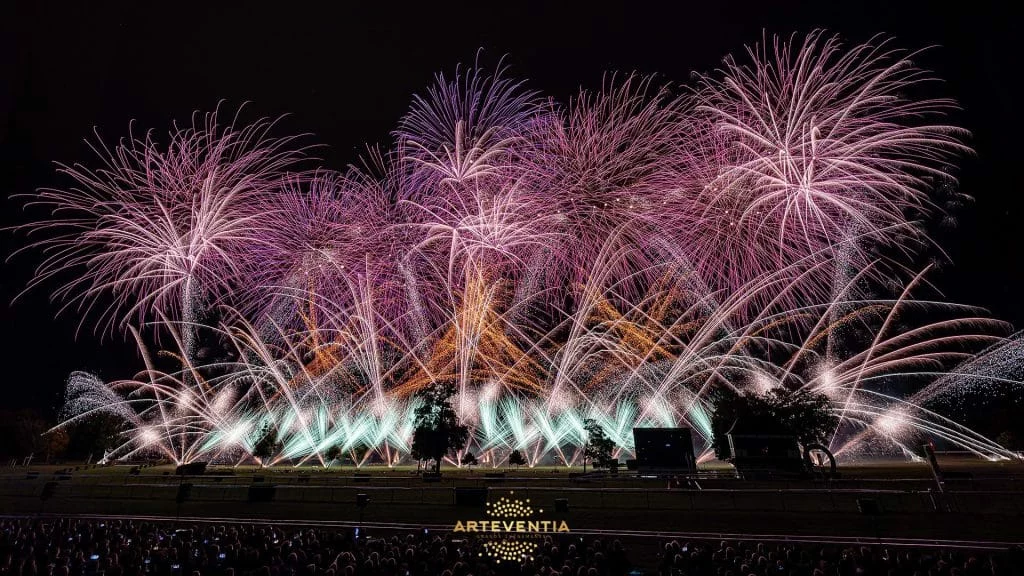
It is no longer enough to simply line up spectacular effects. A vision must be proposed. An identifiable signature. A dramaturgy built from the first second to the finale.
Constraints heighten the demands. Limited time. Strict regulations. Sometimes, a controlled quantity of fireworks. Every effect must justify its presence. The slightest imprecise transition is immediately noticeable.
At the Loto-Québec International Fireworks Competition in Montreal, the staging must interact with a spectacular natural site and a strong historical tradition. In Danang, the competition brings together teams from several continents, each bringing its culture, its aesthetic, its way of designing fire.
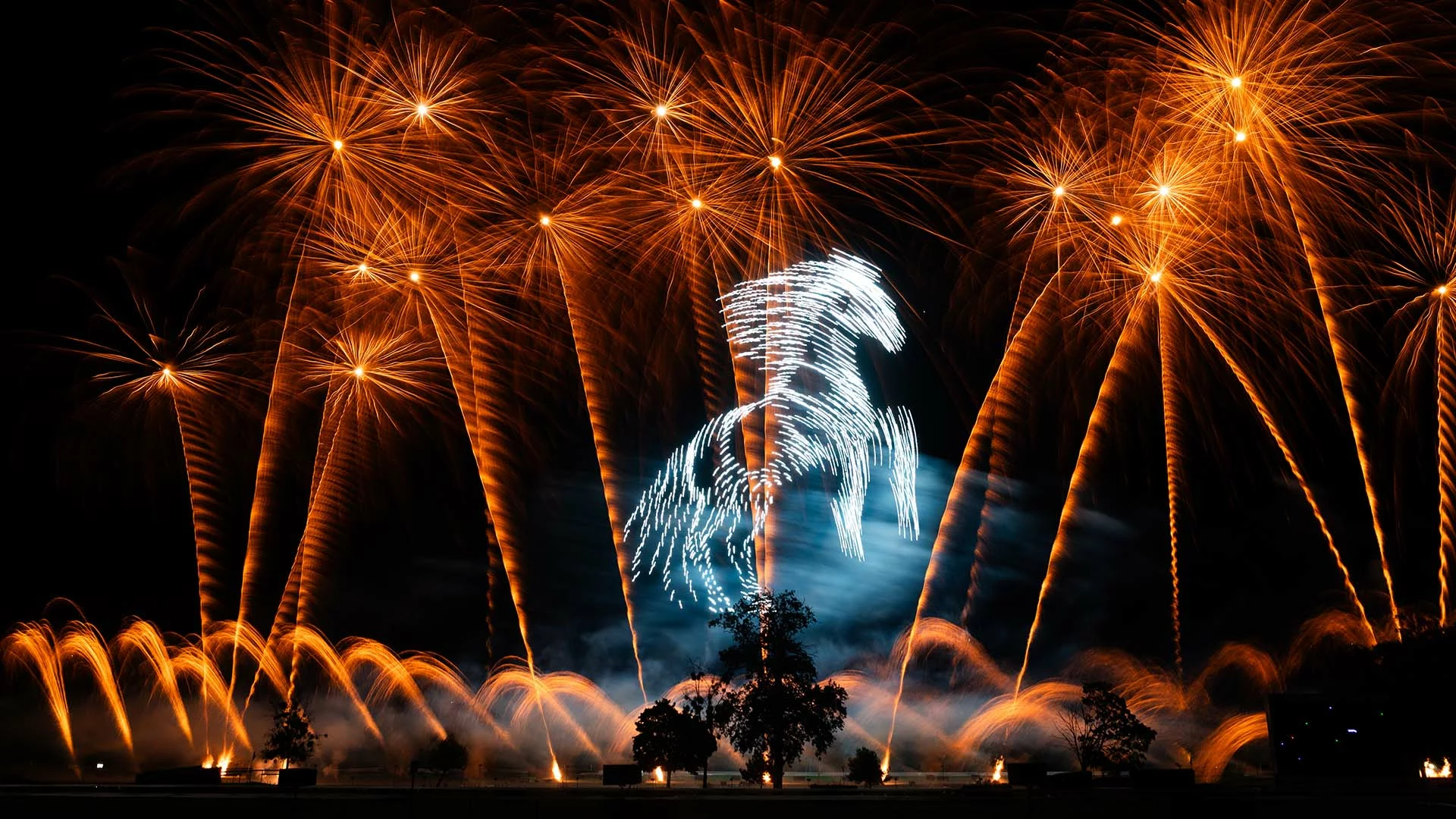
At the Masters of Fire, for which ARTEVENTIA provides artistic and technical direction alongside Masters & Events Factory, the competition is part of a scripted production, conceived as a global show. The evaluation focuses as much on artistic coherence as on technical performance.
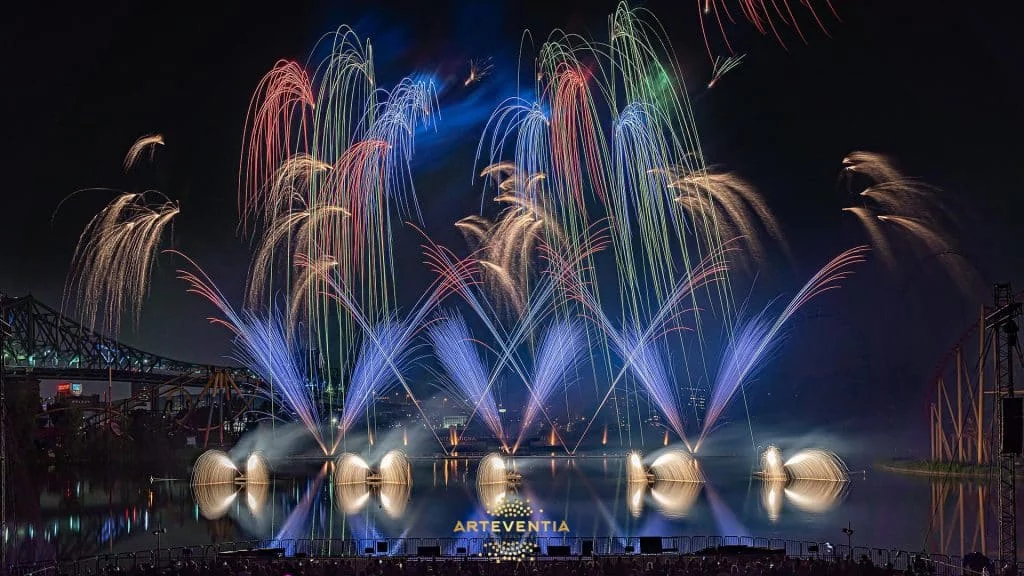
In these international arenas, pressure becomes a driving force.
Teams refine their design. They dare more. They seek absolute precision. Musical synchronization becomes surgical. Transitions are worked down to the millisecond.
Competitions are laboratories.
What is experimented there then permeates major public and private creations. The bold ideas tested in competition become benchmarks. The acquired rigor elevates the general standard.
Participating in an international competition is not just about aiming for a medal. It is about accepting to be judged on one’s ability to tell something unique in a few minutes.
It is about transforming fire into a language.
And in this exercise, every detail counts.