How is a pyrotechnic show written?
A pyrotechnic show is much more than a simple fireworks display. Behind a few minutes of light in the sky lies a true creative endeavor combining artistic writing, music, computer programming, and technical mastery of pyrotechnics.
From large popular festivals to international competitions, contemporary pyrotechnic shows are designed as true visual productions. But how is a fireworks show created? How do pyrotechnicians compose these choreographies of light that mesmerize the audience?
At first glance, a fireworks display seems to appear spontaneously in the sky. A few minutes of bright flashes, colorful explosions, a spectacular grand finale… then silence returns.
But behind these moments of wonder lies a particularly precise creative process. A pyrotechnic show is much more than a succession of pyrotechnic devices: it is an ephemeral work, conceived as a visual and auditory score.
In major international competitions or during large public events, pyrotechnics become a true artistic language where chemistry, electronics, music, and dramaturgy intertwine.
So how is a pyrotechnic show truly written?
What is a pyrotechnic show?
A pyrotechnic show is a staged fireworks display synchronized with music and designed as an ephemeral visual work.
In France, regulations define a pyrotechnic show based on the quantity and category of pyrotechnic devices used.
A show is considered pyrotechnic when the pyrotechnician uses:
-
at least 35 kg of active material from Category F2, F3, or T1 articles
-
or at least one Category F4 or T2 article
But beyond this administrative definition, the artistic reality is quite different.
A pyrotechnic show is a scripted visual composition, designed to be experienced collectively by the audience.
The Structure of a Pyrotechnic Show
Like a musical work or a play, a pyrotechnic show generally follows a dramaturgical structure.
It most often includes:
-
an opening
-
several acts (generally between five and eight)
-
a grand finale
The average duration of a show is around 12 to 18 minutes.
Throughout this sequence, the intensity gradually builds. Effects become denser, rhythms accelerate, and emotions amplify until the apotheosis of the grand finale.
This progressive construction is essential: it guides the audience’s gaze and structures the emotional experience of the show.
The Site: Starting Point for Creation
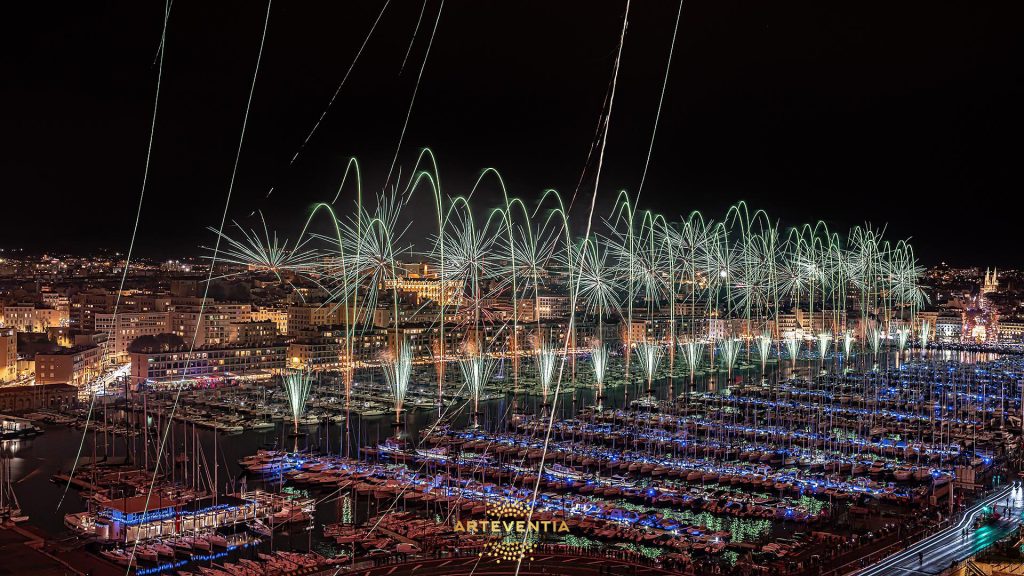
The design of a pyrotechnic show always begins with a study of the site.
Each location imposes its own constraints and inspires a different approach:
-
a historical monument
-
a body of water
-
a park or natural site
-
a stadium or urban area
-
an open venue like a racecourse
Topography, safety distances, proximity to the public, and the architectural environment directly influence the staging.
The sky then becomes a true stage.
Music: The Show’s Score
In most contemporary creations, music plays a central role.
It forms the backbone of the show.
Designers create a soundtrack that serves as a score. Each piece corresponds to an act and defines the rhythm, atmospheres, and transitions.
Like a conductor, the pyrotechnician then composes with pyrotechnic effects to accompany the highlights of the music.
Explosion, ascent, silence, suspension: each effect is chosen to interact with the soundtrack.
Technology in Service of Creation
Technological advancements have profoundly transformed the writing of pyrotechnic shows.
Today, pyrotechnicians use specialized software to:
-
program each effect
-
synchronize firings with music
-
visualize the show before its realization
The electronic firing system allows for extreme precision, often to the order of a hundredth of a second.
This precision makes perfect synchronization between music and visual effects possible.
However, despite these tools, each show remains unique. Real-world conditions — wind, humidity, or site configuration — always slightly influence the final rendering.
Pyrotechnic Devices: An Infinite Palette
Pyrotechnicians today have a very wide variety of pyrotechnic articles at their disposal.
They come from major international manufacturing centers, notably:
-
China
-
Italy
-
Spain
-
other specialized manufacturers worldwide
Each product has its characteristics: shape, color, duration, scale.
This diversity allows for the creation of extremely rich visual combinations.
Certain figures have become emblematic, such as the peony-type round shell, often associated with grand finales.
But the continuous innovation of manufacturers regularly allows for new effects and surprises for the audience.
Writing with Light and Emotions
The true writing of a pyrotechnic show is based on emotion.
Designers use colors, volumes, and rhythms to accompany musical sensations:
-
warm colors for intensity and power
-
cool tones for softness or contemplation
-
sparkling effects to create suspension
-
rapid volleys to mark highlights
As in cinema or theater, each act contributes to the construction of a visual narrative.
The show then becomes a coherent work, where music and light interact in the sky.
An Ephemeral Work
The particularity of a pyrotechnic show lies in its fleeting nature.
Each creation exists only at the moment it unfolds. Once the last effect dissipates, only the shared memory remains for the audience.
This is undoubtedly what makes pyrotechnics so special: it is at once spectacular, popular, and profoundly ephemeral.
Ultimately, writing a pyrotechnic show consists of composing with light, rhythm, and space to offer, for a few minutes, an unforgettable collective experience.
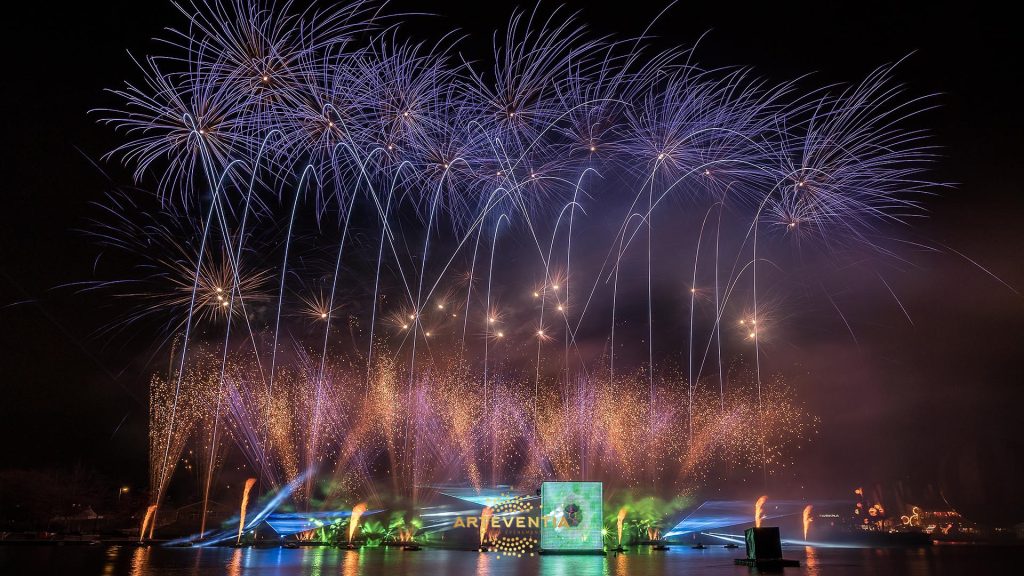
Towards Hybrid Pyrotechnic Shows
Today, technological advancements open up almost infinite possibilities in the design of pyrotechnic shows. Pyrotechnicians have increasingly precise programming tools, renewed visual effects, and a constantly evolving technical palette.
This richness allows for multiplying combinations of musical rhythm, colors, volumes, and light intensity. The show then becomes a true choreography of light, where each effect interacts with the music and space.
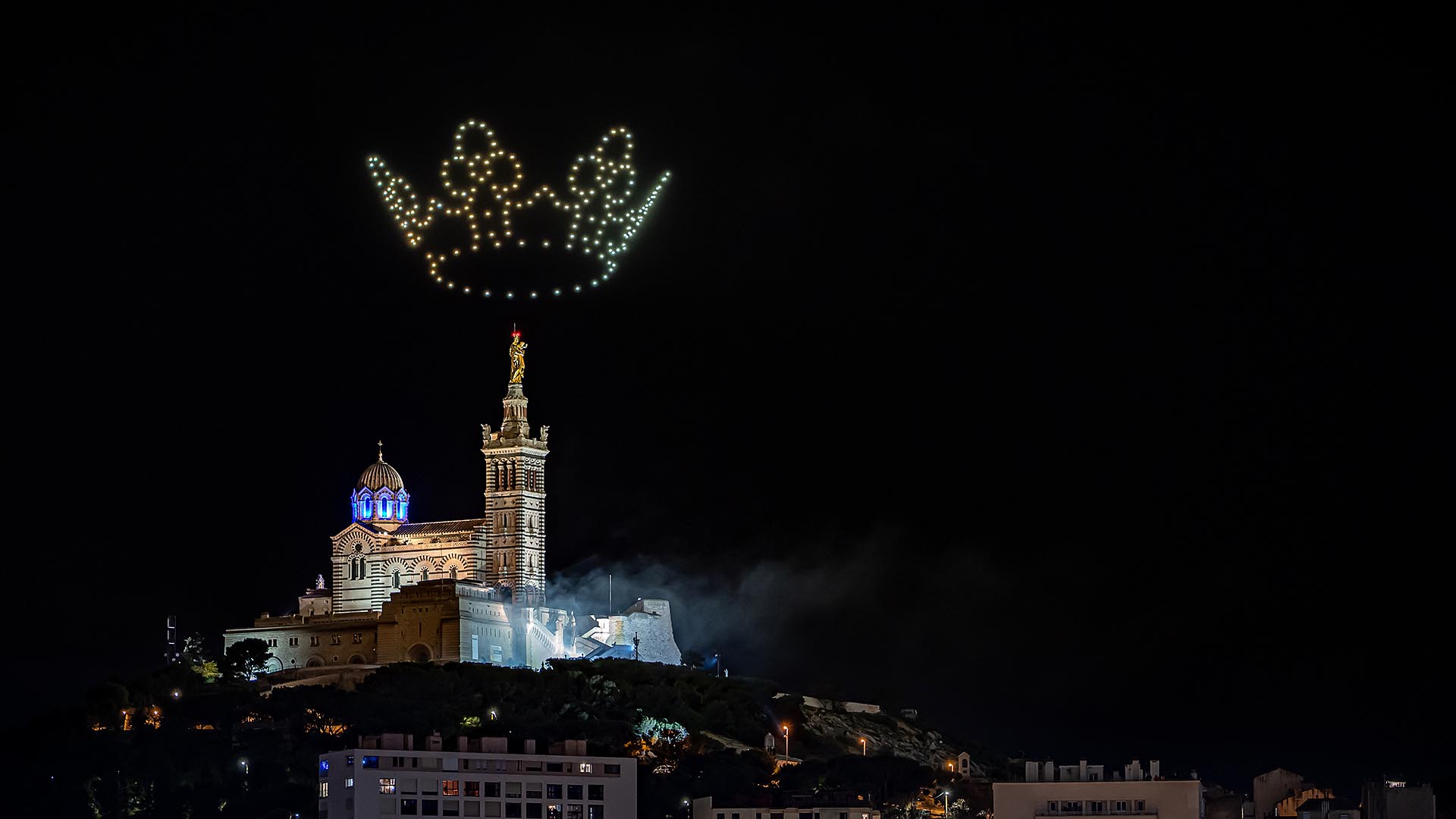
This evolution has also given rise to what are now called hybrid shows, blending pyrotechnics with other stage technologies: luminous drones, lasers, architectural lighting, or video mapping.
These new forms of creation open up exciting prospects for the future of visual entertainment.
We will return to this topic soon in an article dedicated to these new forms of show writing.
Frequently Asked Questions about Pyrotechnic Shows
What is the difference between fireworks and a pyrotechnic show?
Fireworks generally refer to the firing of visual pyrotechnic devices.
A pyrotechnic show is a scripted creation that often combines music, computer synchronization, visual dramaturgy, and site staging to create a complete artistic experience.
How long does a pyrotechnic show last?
Most pyrotechnic shows last between 12 and 18 minutes. This duration allows for structuring several acts and building a progressive ascent towards the grand finale.
How are fireworks synchronized with music?
Pyrotechnicians use specialized software that allows them to program each effect and trigger firings using an electronic system. Synchronization can achieve precision to the order of a hundredth of a second.
Who designs a pyrotechnic show?
The creation of a show is generally carried out by a pyrotechnic designer or artistic director who conceives the visual dramaturgy, selects the effects, and builds the synchronization with the music.
Édouard Grégoire
Artistic Director – ARTEVENTIA
Read also:
L’histoire de la pyrotechnie : des origines chinoises aux spectacles contemporains