Can Pyrotechnics Be Eco-Responsible?
At every major event, the question arises.
In an era of ecological transitions and carbon footprints, does the fireworks display still have a place?
The debate is legitimate. But it deserves to be approached with nuance and data, rather than shortcuts.
A pyrotechnic display does indeed generate emissions: fine particles, combustion gases, metallic residues related to colors. The impact exists. But it is temporary. A fireworks display lasts on average fifteen to thirty minutes. The observed particle peaks are temporary and generally decrease within a few hours depending on weather conditions.
The question then becomes broader: what is the actual impact of the fireworks display in the overall footprint of an event?
Public data related to large gatherings shows that spectator transportation is by far the main source of emissions. At an event like the Annecy Lake Festival, which welcomes several hundred thousand people, travel, accommodation, and catering represent the most significant portion of the carbon footprint. The pyrotechnic display is just one element among others—visible, spectacular, but minor in the overall footprint.
In other words, the environmental issue extends far beyond the fireworks display alone: it questions the entire event model.
The pyrotechnics sector, for its part, has evolved significantly over the last ten years. European manufacturers like Panzera Fireworks or Parente Fireworks are now developing perchlorate-free products, limiting plastics, working on compositions with reduced fallout, and favoring biodegradable materials. These pyrotechnic devices, manufactured in the European Union, are more expensive than some products imported from Asia, but they allow for better environmental control, a reduction in long-distance transport, and superior artistic quality, particularly in terms of colors and covering effects.
This evolution comes at a price. But it demonstrates an industry in transformation, aware of the challenges.
Safety and post-event management are also among the parameters often overlooked. Professional displays are governed by strict standards: defined safety zones, certified pyrotechnicians, approved products, residue recovery after firing. The difference is significant between a supervised production and uncontrolled use.
Should pyrotechnics therefore be considered incompatible with contemporary challenges?
The answer is neither binary nor ideological.
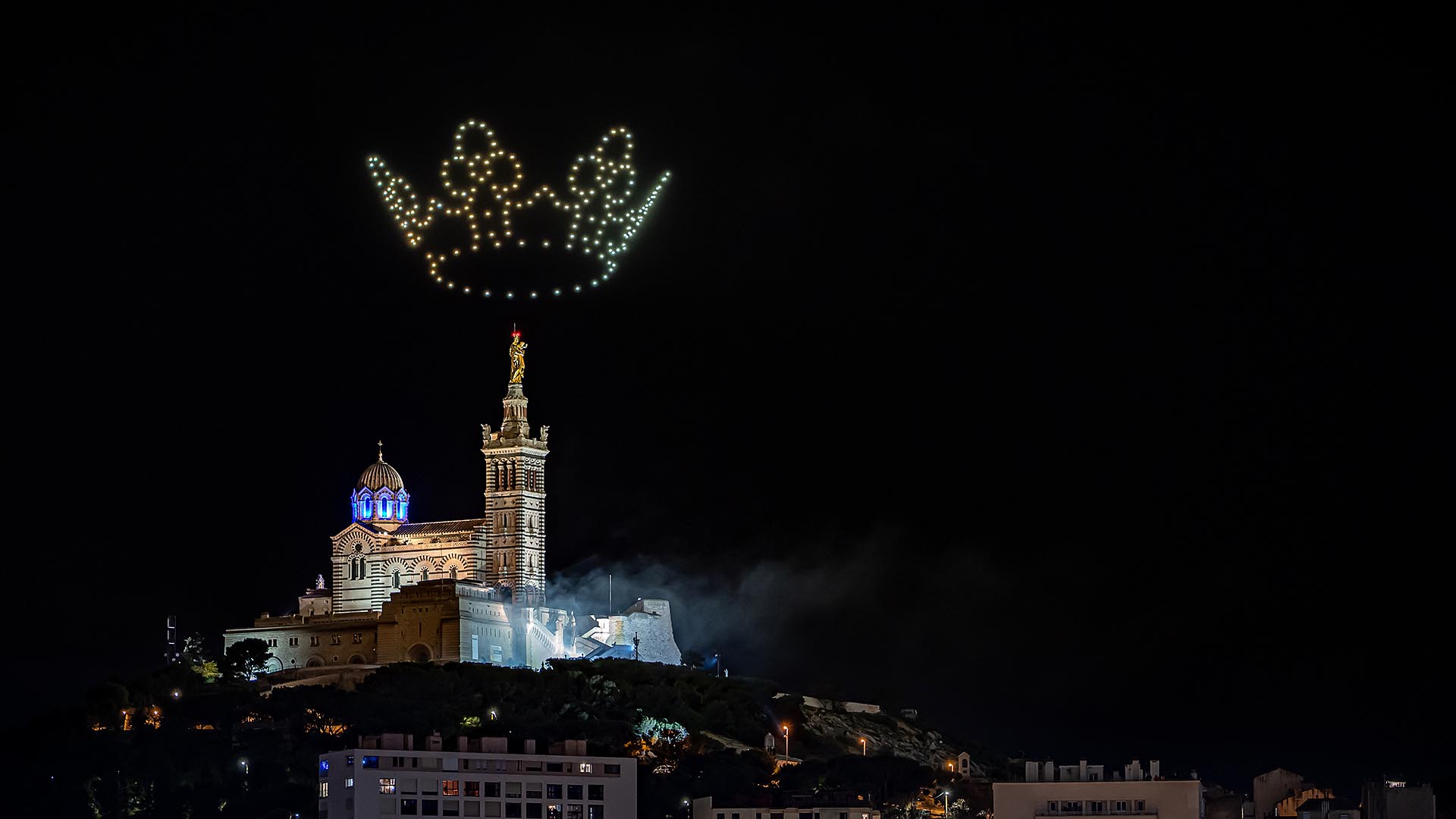
Fireworks are part of a global cultural heritage. They mark milestones, unite audiences, celebrate victories and collective anniversaries. Like any discipline, it evolves: hybridization with light drones, optimization of charges, increased precision of sequences, reduction of materials used through digital programming.
The real question may not be “should we eliminate it?” but “how can we produce better?”
Produce less material, chosen more carefully.
Design more intelligently.
Integrate new technologies with discernment.
And above all, consider the event in its entirety.
The ecological transition does not necessarily require the disappearance of emotion. It requires its transformation.
And this is where artistic creation meets responsibility.