Is pyrotechnic art a live performance that does not recognise itself?
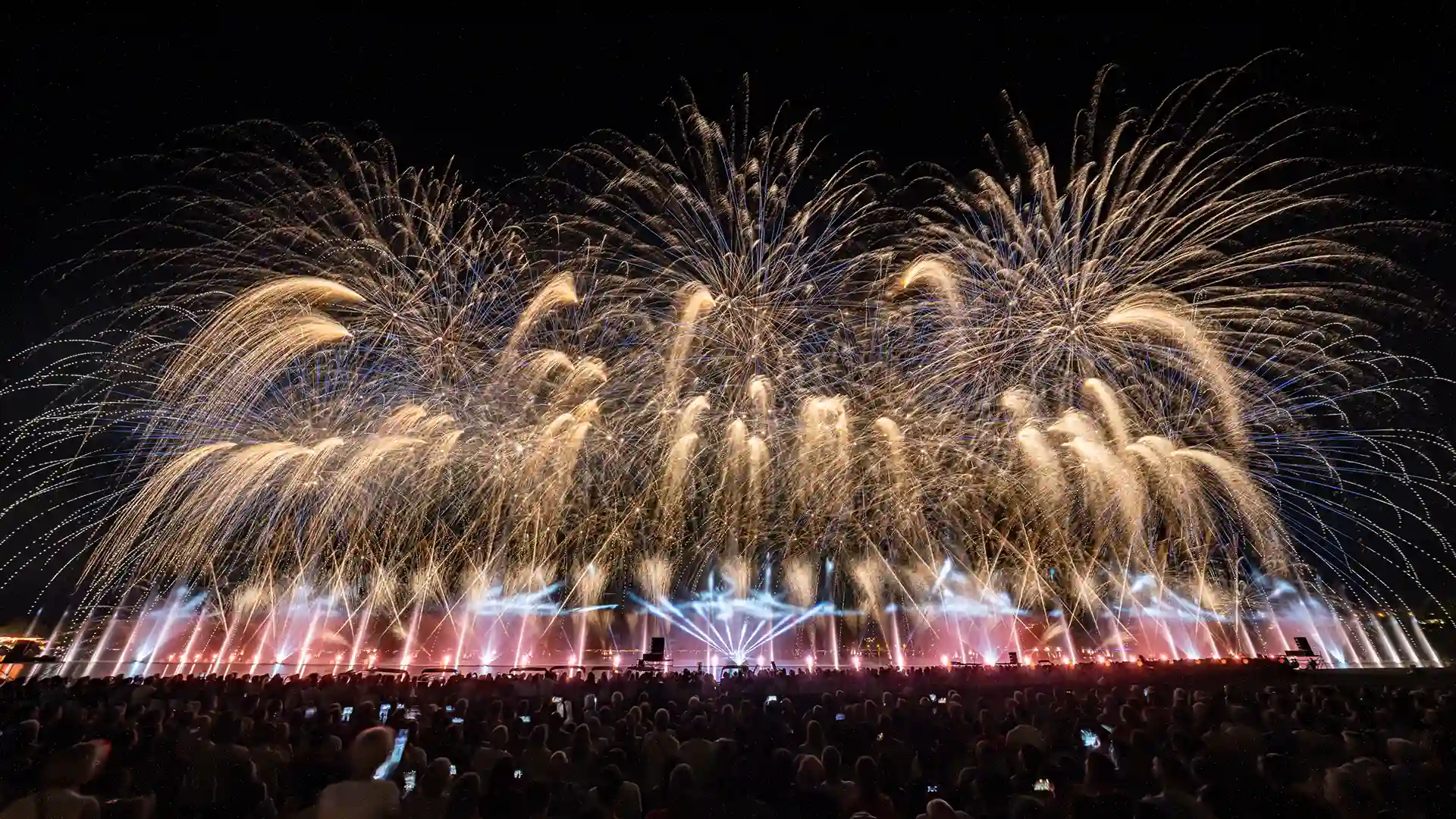
As Bastille Day approaches, hundreds of French cities are preparing to light up the sky. In squares, along quaysides, or in parks, millions of spectators will look up into the summer night. The ritual is immutable. It spans generations.
Every summer, the same phenomenon recurs: a few minutes of pyrotechnics are enough to gather immense, silent, attentive crowds, fascinated by a light display that vanishes as soon as it appears.
And yet, despite this collective and spectacular dimension, pyrotechnic art is not legally recognized as a live performance.
This paradox deserves to be examined.
A royal legacy that has become a national heritage
In France, the pyrotechnic tradition has its roots in monarchical history. Under Louis XIII, and especially under Louis XIV, royal fireworks became true instruments for staging power.
At Versailles, the Divertissements du Roi (King’s Entertainments) combined music, ballets, ephemeral architecture, water features, and fireworks. The shows were scripted. The décors interacted with the light of the fire. The pyrotechnicians were not mere technicians: they designed images, orchestrated luminous compositions, and imagined visual sequences intended to amaze the court.
On July 18, 1668, during the Plaisirs de l’Île enchantée (Pleasures of the Enchanted Island), the fireworks were part of a global staging of the castle and its gardens. Fire became a visual language serving a total spectacle.
Long before the word appeared, one could already speak of total art.
After the Revolution, this tradition transformed. Civic celebrations appropriated pyrotechnics as a collective symbol. Gradually, fireworks became a marker of public celebrations, eventually establishing themselves as one of the major rituals of Bastille Day.
France thus possesses a centuries-old pyrotechnic tradition, deeply embedded in its cultural heritage.
A contemporary language
Today, a grand pyrotechnic show involves much more than a simple succession of effects.
It includes:
-
artistic direction
-
musical composition
-
meticulously timed digital programming
-
spatial scenography
-
complex technical coordination
-
highly qualified pyrotechnic teams
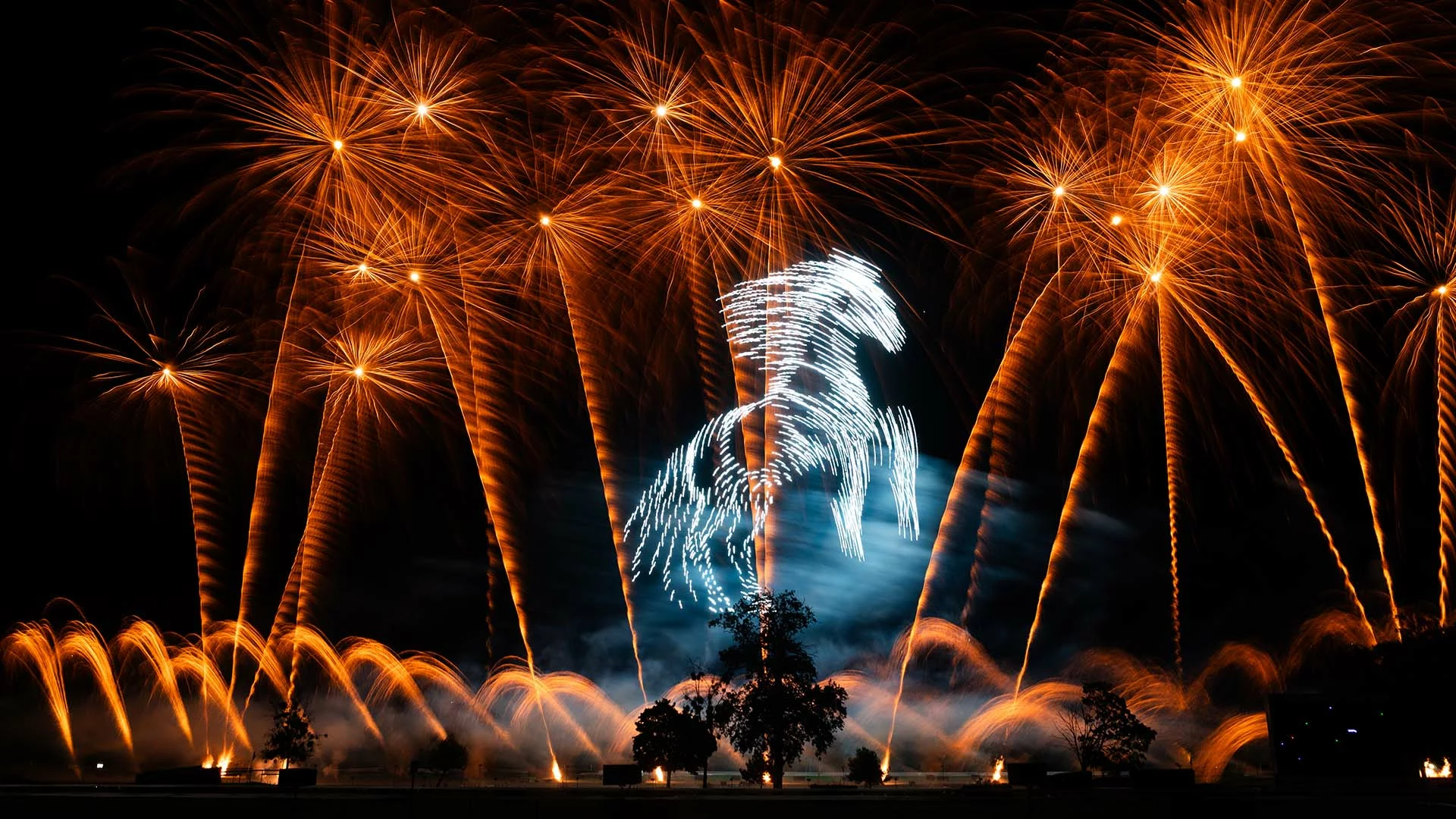
Each show is conceived as a visual score. Effects are chosen for their narrative role. Sequences unfold according to precise dramaturgy. Musical synchronization is timed to the millisecond.
The work unfolds in real-time, before an audience.
The major difference from theater or dance lies in the absence of a visible performer on stage.
But the performance is indeed there.
The execution is immediate, irreversible. The show exists only at the moment it occurs. Once the last effect dissipates, only the collective memory of the moment remains.
The legal framework
In France, live performance is legally defined by the physical presence of at least one performing artist in front of an audience.
Pyrotechnic art, although artistic, performative and scripted, is classified in a different administrative category. It falls more under technical services than stage creation in the regulatory sense.
This distinction relates less to the artistic nature of the work than to a legal definition inherited from the history of performing arts.
Fire is considered a device.
Not an interpretation.
A major popular art form
Few artistic disciplines simultaneously gather so many spectators.
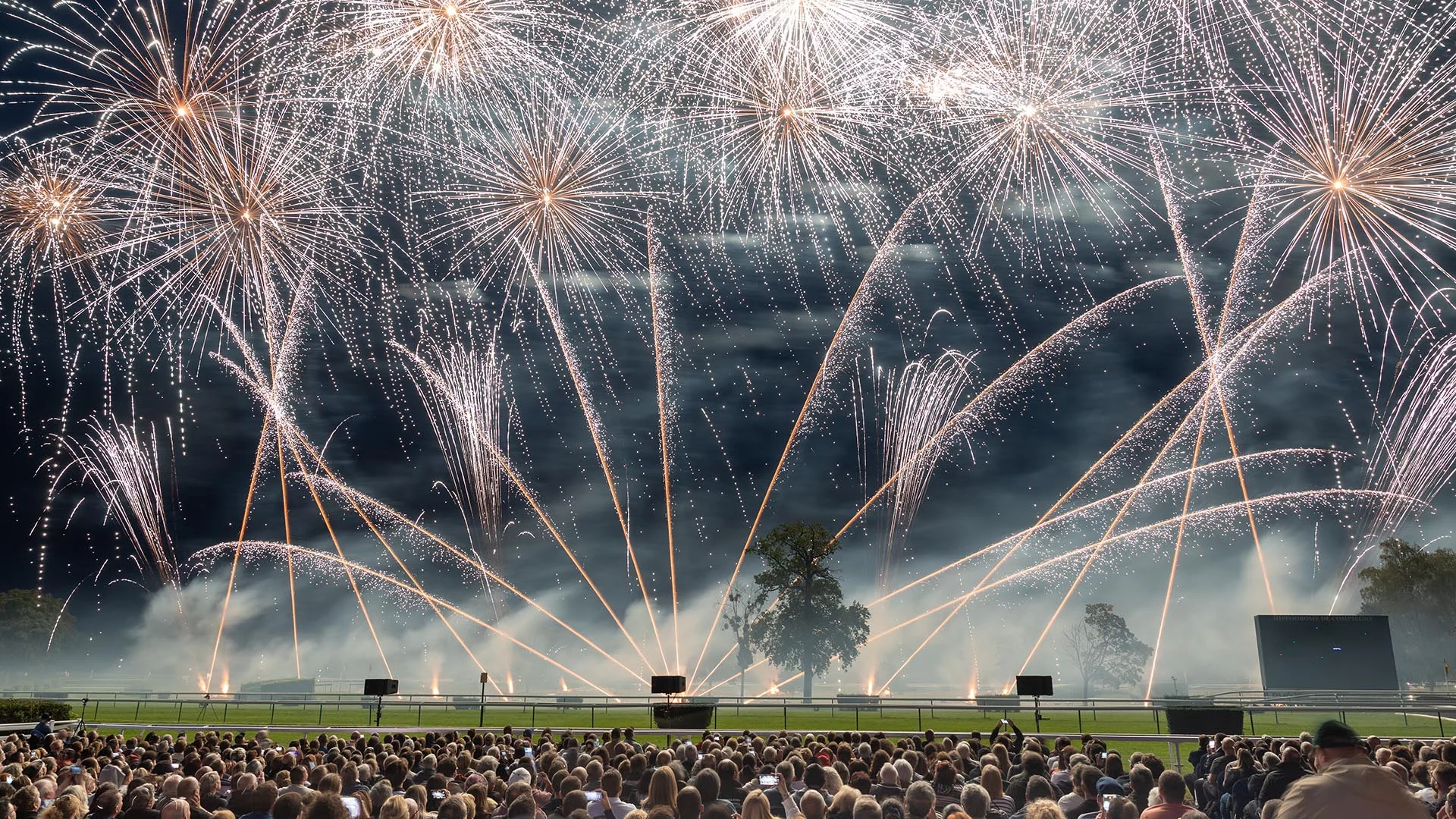
Each year, major pyrotechnic shows attract hundreds of thousands of people to the same location. Fireworks transcend social classes, generations, and cultures. They accompany national commemorations, popular festivals, and major sporting or cultural events.
In a way, it belongs to the common heritage.
And yet, it remains largely on the sidelines of structured cultural policies.
Is institutional recognition needed?
The question is not controversial. It is cultural.
Recognising pyrotechnic art as a form of live performance would not mean transforming it. It would remain what it is: an ephemeral, collective, spectacular work.
However, such recognition could allow for:
-
better valuing the artistic dimension of the discipline
-
integrating pyrotechnics into heritage considerations
-
moving beyond the strictly technical image often associated with it
Because behind every grand spectacle, there is a narrative, an intention, a vision.
As Bastille Day approaches, perhaps the question should be posed differently:
are fireworks merely a tradition…
or already a full-fledged art form?
Édouard Grégoire
Artistic Director – ARTEVENTIA
Creator of pyrotechnic and visual shows for public and international events.