Reduced-noise fireworks: innovation, necessity, or a new approach?
For a long time, fireworks have been associated with loud noise.
With the shockwave that rattles facades.
With the rumble that announces the finale.
However, expectations are evolving. Denser city centers, concerns related to animal welfare, increased sensitivity to noise pollution: more and more organizers are asking questions. Should noise be reduced? And above all, is it still a “real” fireworks display without powerful detonations?
The answer is neither binary nor ideological.
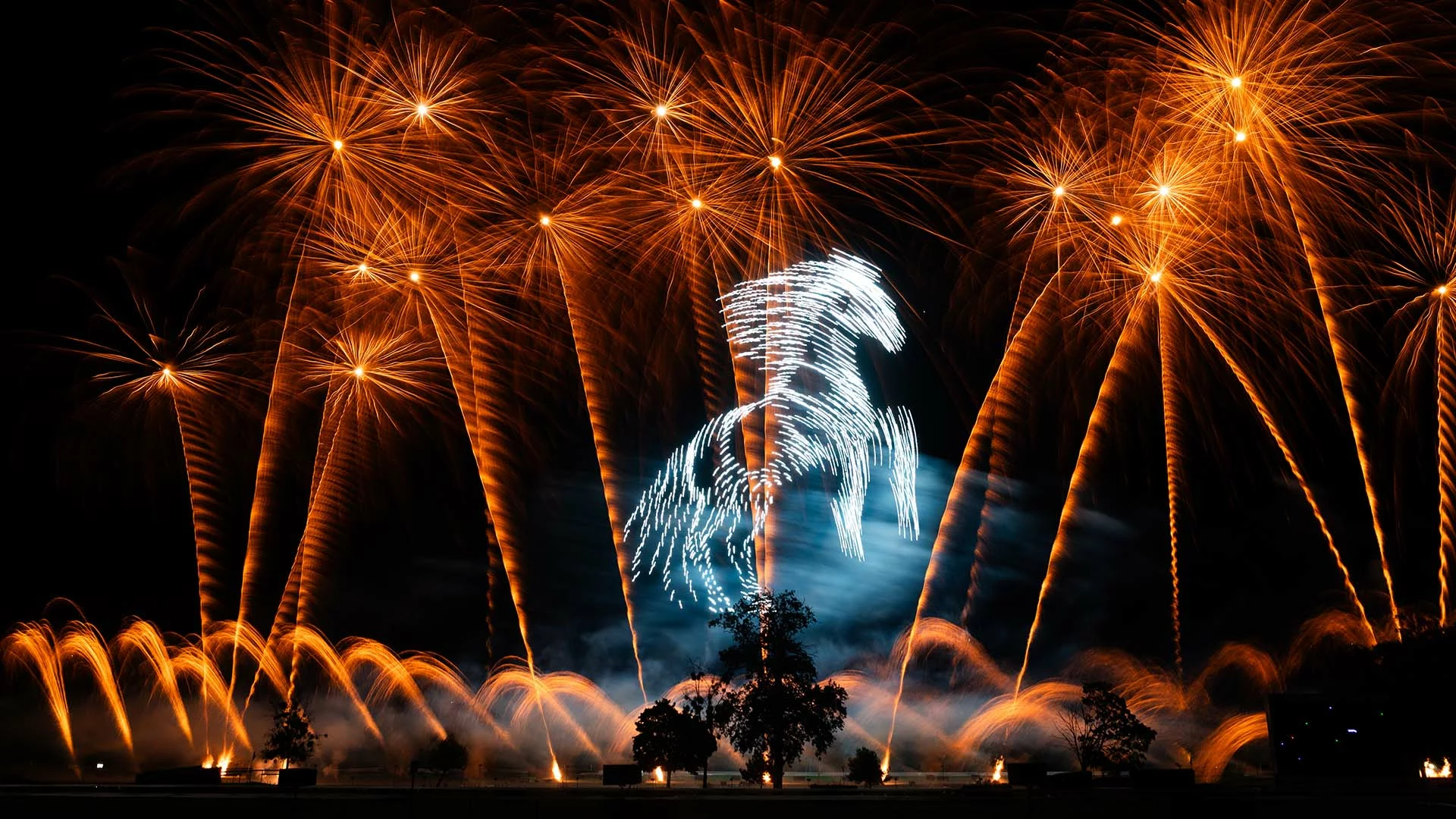
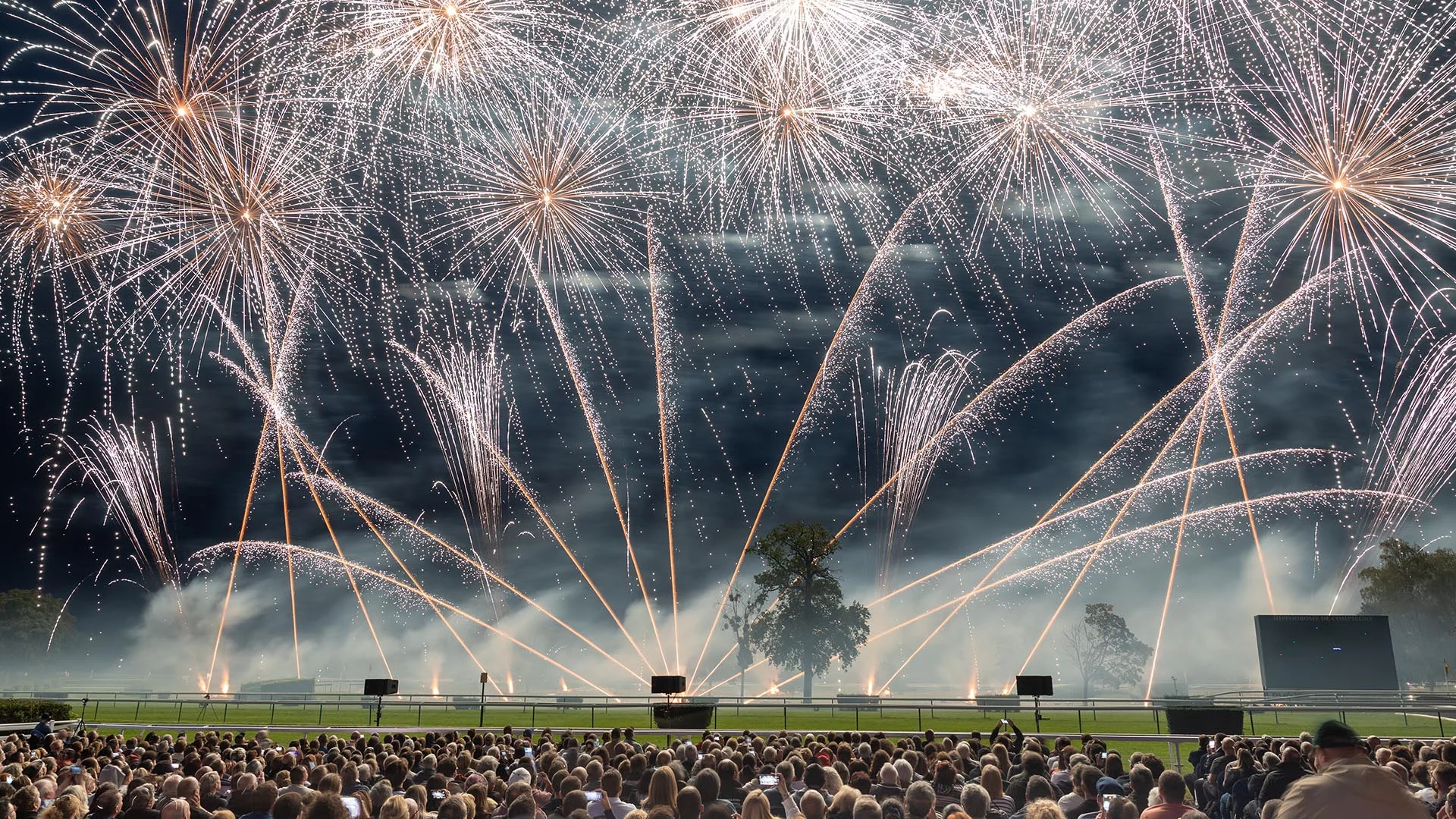
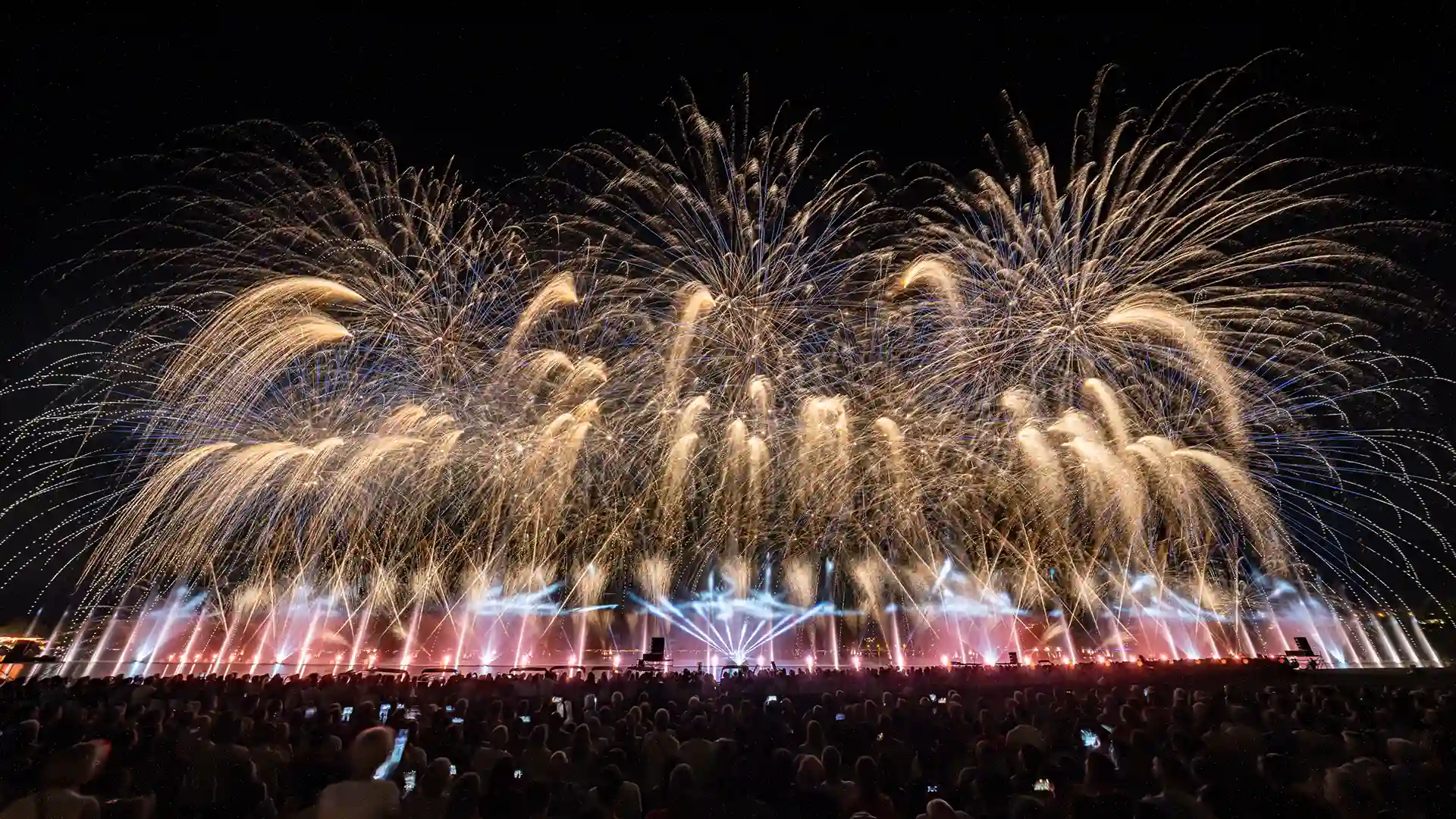
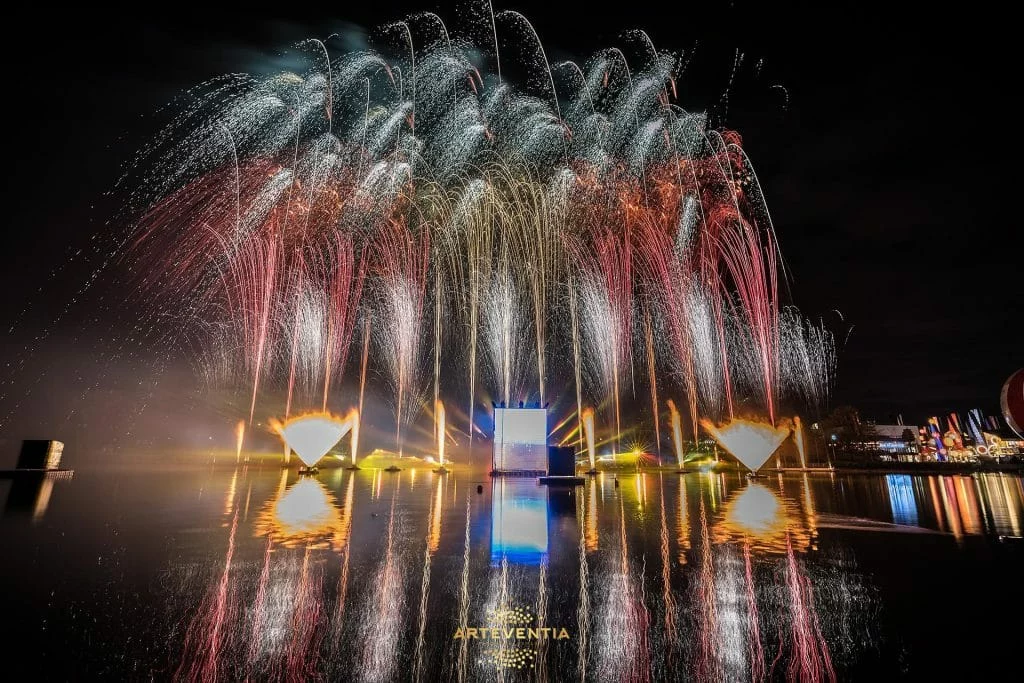
So-called “reduced-noise” fireworks are not silent. They rely on a selection of effects that prioritize the visual dimension rather than detonation. Fewer high-impact salutes, more comets, palms, waterfalls, sparkling or crackling effects. The sky continues to ignite — simply with a more controlled sound signature.
The demand often comes from urban communities or heritage sites. In certain residential areas, noise constraints become an integral design parameter. Similarly, the animal question — both domestic and wild — now occupies a real place in preparatory discussions.
But reducing noise does not mean reducing ambition.
On the contrary, a reduced-noise show requires a more refined composition. Deprived of certain high-impact effects, the creator must work more on rhythm, musical synchronization, and the depth of the scenes. The emotion no longer relies on the shockwave, but on the visual composition.
Technology supports this evolution. Manufacturers are developing specific ranges that limit detonations while maintaining intense colors and comprehensive effects. Digital programming also allows for increased precision in sequence management, avoiding unnecessary accumulations.
This change reveals a broader transformation: fireworks are no longer solely perceived as a demonstration of power, but as an artistic creation integrated into their environment.
Some voices consider that tradition is being “diluted.” Others see it as a necessary adaptation to contemporary expectations. In reality, the history of pyrotechnics is one of continuous evolution. Compositions have changed, techniques have modernized, and staging has become more complex.
Noise has never been the essence of fireworks.
Light, yes.
A reduced-noise show is not a cheap compromise. It is a different way of composing. An approach that favors subtlety over brutality, narration over percussion, and image over impact.
And in a world where public attention is more demanding than ever, this approach can prove particularly powerful.